Did Iran win the war against the United States over Iraq?
By Glenn Abela
The 2003 US invasion of Iraq provided the perfect opportunity for the overwhelmingly Shia Iranian regime to get rid of its long time Sunni rival and threat in Iraq. The US settlement in the country and region, along with its long lasting implications would not only alarm Iran, but also forever change the geopolitical map of the Gulf region (Sari, 2021). It would see Iran aspire to become a regional hegemon, various non-state actors emerge with a correspondingly complex network of support, as well as the US and its Saudi ally playing a more prominent role to thwart Iranian expansion. For this reason, the war over Iraq also became a wider conflict for influence over the Gulf region and the Middle East, establishing a complex web of geopolitical alliances that have dominated regional politics for over a decade. This article analyses the complex geopolitical issues that have hampered the region since the 2011 US withdrawal from Iraq to evaluate whether it was Iran or the US that emerged victorious in their fight over regional influence.
Following the US-led invasion of Iraq, Iran found a determination from within to eclipse the US and become the most influential state in the region partly by playing a more active role in Iraq’s political scene and domestic affairs (Cohen, 2020). During the occupation Iran attempted to exert influence by purchasing land in predominantly Shia regions, obtaining tenders to rebuild cities such as Basra, and supporting Shia militias in an insurgency against US forces. It also started playing direct roles in Iraqi politics by funding predominantly Shia factions with prominent Iranian figures such as Soleimani meeting top Iraqi officials, but its ability to exert this influence took different turns. For instance, Iran’s own internal issues in suppressing the 2009 Green Movement saw its ability to exert influence in Iraq slightly held back (Rahimi, 2012). Despite this US-Iranian rivalry, the US was willing to allow for Iranian influence in Iraqi politics in the latter stages of its occupation, opting to prioritise the safety and stability of its own pull-out instead (Salloukh, 2013). This influence has since grown to find its basis not only on religious grounds, but also on economic agreements and shared security concerns which has increased interdependence between these two neighbouring states (Esfandiary and Tabatabai, 2015).
Iraq is also important to Iran due to its close proximity to its allies namely Assad in Syria, Hezbollah in Lebanon, Hamas in Gaza, and Shia militias in the region, serving as a land bridge in achieving this goal. Growing Iranian influence in the Gulf would be of considerable alarm to Saudi Arabia, which together with the blessing of its US ally embarked on a geopolitical campaign designed to maintain the status quo and hinder Iranian hegemonic aspirations to promote its own. These efforts could largely also be observed in the Gulf, notably in Bahrain, where during the Arab Spring the Saudi regime denounced the 2011 uprisings as an Iranian plot to destabilize the Gulf state, justifying its support of the Bahraini government in a brutal crackdown on protestors (Salloukh, 2013). Rather than a full blown confrontation the two regional powers resorted to backing factions or governments directly, to prevent the other from gaining the upper hand. This rivalry has been described as the cold war of the Islamic world, becoming a struggle for competing ideologies and religious affiliations rather than merely a hegemonic rivalry (Devine, 2019). The US has its own political aspirations in this regard, and its support for Saudi Arabia particularly has been a key foreign policy tool to counter growing Iranian influence in the Persian Gulf. The Yemeni Civil War is a prime example of this alliance, with the Saudi military campaign against the Iranian-backed Houthis receiving significant US support despite human rights violations and its legality being heavily questioned (Hursh, 2020). Iraq’s contested grounds have also seen Saudi Arabia get involved by offering support to various Sunni political groups in a bid to rid Baghdad of Iranian influence, increasing intra-Arab divisions and regional instability in what turned into a sectarian war to prevent Iran from establishing a foothold. These Saudi efforts have had some successes with a number of notable Iraqi politicians, such as former prime minister Maliki himself, changing tone towards Iran. What is also of notable importance is that these recent developments have seen increased Iraqi public frustration at their own domestic political instability, but also at the influence these foreign powers are able to exert along with their activities within the Iraqi state (Sari, 2021).
In 2011 Iraq’s turbulent experience with democracy was aggravated by the Arab Spring and the outbreak of the Syrian Civil War, with the latter again seeing the US and Iran on opposing ends. Iran had maintained its support for Iraqi Shia groups and prime minister Maliki to continue dominating domestic politics after the US pull-out, but the inflow of Sunni fighters from Syria worsened sectarian violence (Terrill, 2015). The rise and spread of ISIS saw the US and Iran jointly sharing the same security threat despite their overlapping interests. An opportunity was presented for the two rivals to cooperate yet both opted to develop different strategies, although keeping Iraq unified was a mutual interest shared by both. Whilst Iran acted unilaterally with boots on the ground, the US acted multilaterally, assembling an international coalition which conducted an air campaign in both Syria and Iraq as both sides directly aided and assisted the Iraqi government. Whilst the US envisioned a strong Iraq capable of sustaining itself, Tehran preferred an Iraq that was dependent on itself in a bid to secure its interests whilst simultaneously mitigating the risk of replicating the bloody conflict of the 80s. The campaign against ISIS in Iraq therefore also became part of a wider conflict over establishing regional influence (Esfandiary and Tabatabai, 2017).
The Iranian nuclear program has a long history, but it was the US physical and regional introduction in Iraq and Afghanistan that altered relations in this regard. The program was only discovered in 2002 by chance having managed to be kept secret for well over a decade. Considering the domestic abundance of fossil fuels to meet its energy needs, Iranian claims of its peaceful purposes only served to accelerate the US’s argument that it posed a direct threat to its own regional aspirations (Özcan and Özdamar, 2009). Having seen first-hand that being linked to WMDs does not guarantee immunity from US attacks, Iranian nuclear compliance was observed in the early stages of the US invasion, although this changed after 2005 (Bowen and Kidd, 2004; Özcan and Özdamar, 2009). Mistrust namely from the US and Israel remained and although no direct military attacks took place on Iranian facilities, its programme was indirectly targeted in the form of computer attacks and assassinations of leading scientists (Oren, 2011). The Obama administration eventually became more tolerant to growing Iranian influence in the region during the ISIS counterinsurgency, paving the way for the 2015 nuclear agreement. Its signing was historic not only because of the significant shift in US policy towards its rival, but also because it was willing to turn its back on the concerns of its long time regional allies – Israel and Saudi Arabia (Sari, 2021). With Trump’s withdrawal from the agreement in 2018 and the reimposition of US sanctions, relations again soured. Rather than hampering Iranian aspirations such a move had the opposite effect, with Iran moving closer to China and becoming even more active in the region, as evident in its recent widespread support for Hamas and Hezbollah. Furthermore, certain US policy decisions have contributed to increasing hostility in US-Iran relations such as the 2020 assassination of General Soleimani and the designation of the Islamic Revolutionary Guard Corps as a terrorist organisation (Alisobhani, 2022). Furthermore, their desire to assert regional hegemony has seen the two states engage in direct covert hostilities, evidently manifested in Iraq where Iranian-backed Shia groups have frequently targeted US military personnel and infrastructure, and irking strong US counterreactions in the process, perfectly illustrated in the 2020 attacks on Camp Taji for instance (Sari, 2021).
Summing up who emerged victorious in the war over Iraq is not straightforward. Iran has maintained a foothold via its support for Shia political groups and militias, and Iraqi leaders have themselves generally become more appreciative of having friendly relations with their neighbour, although US presence remains valued by the Iraqi hierarchy. Iran has come a long way since the 2003 US invasion, steadily beefing up its influence and ability to shape Iraqi politics whilst the US slowly lost its total grasp in comparison to the early 2000s, largely a result of Iraq’s democratic transition.
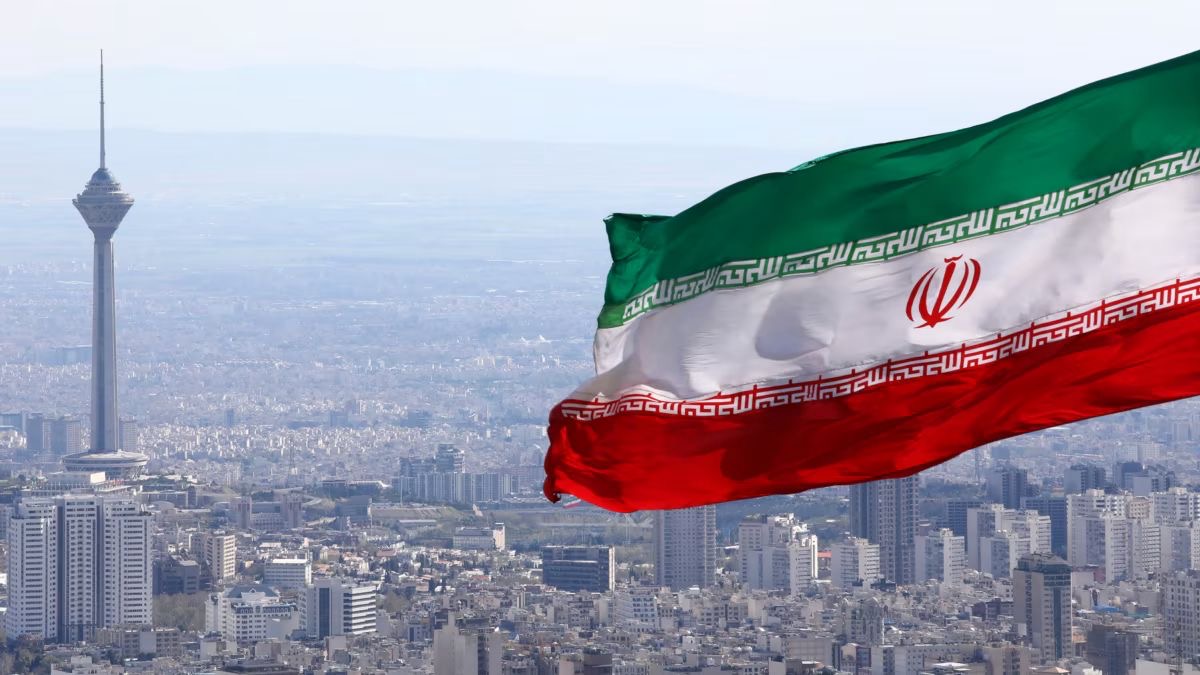
As discussed, this regional rivalry has taken different turns with each new development, and with Iraqi politics still proving fragile, the door remains open for either to keep exerting influence. The recent and sudden downfall of Assad, the strategic weakening of Hamas and Hezbollah, and continuing efforts to thwart Houthi capabilities have reversed a lot of the Islamic Republic’s regional gains. Based on his previous term in office, Trump’s coinciding return to power may suggest an opportunity to cement Iran’s diminishing regional influence, but his remarks have hinted towards a US refocus away from the region. Although the situation remains fluid and the dust needs to settle before coming to any hypothetical conclusions, Baghdad’s imperative importance to Tehran remains unquestionable, making it highly unlikely that the Islamic Republic would accept defeat in Iraq as it would anywhere else.