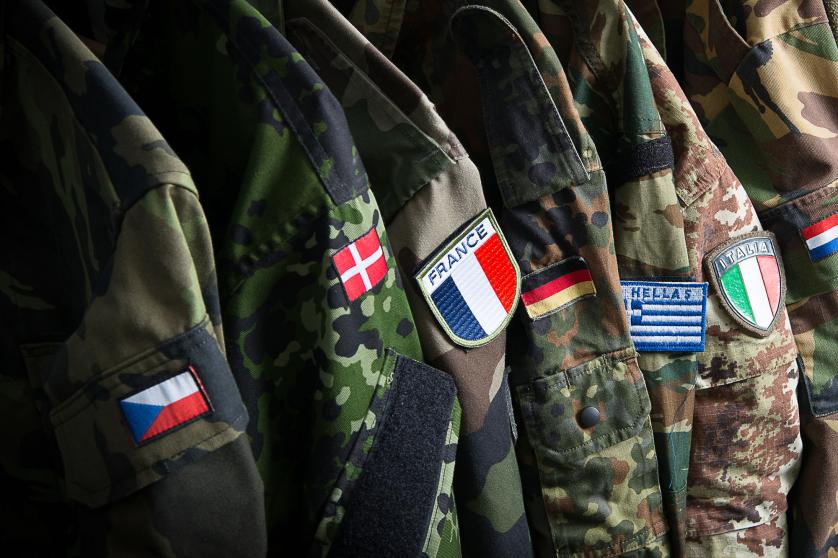
The Future of European Defence? Envisioning A European Army
by Michael Gatt
For several generations, Europe was always the future. It started off with the vision of Altiero Spinelli and Ernesto Rossi, prisoners locked up on the island of Ventotene, off the coast of Italy, during WWII. Together they formed a manifesto ‘For a Free and United Europe’, which painted a picture of a continent in which former enemies would gather to make sure that Europe would never return to its former self. The dream of peace outlined in this document is oncemore on the brink of facing challenges, for which the EU must come up with answers.
The European Union’s Common Foreign and Security Policy (CFSP) is a crucial framework which aims to preserve peace while strengthening international security in accordance with the principles enshrined in the United Nations Charter (European Commission, 2021). Ongoing geopolitical tensions and power shifts outline the necessity for greater EU strategic autonomy on several fronts, with CFSP and economic security at the
heart of such reform, as outlined in the report on the future of European competitiveness which highlights the solutions for issues standing in the path of further European integration (Draghi, 2024). Furthermore, in the political guidelines presented on 18 July 2024, President-elect Ursula von der Leyen placed defence on the top of the list as a priority, in order to build the so called ‘European Defence Union’ (European Parliament, 2024). Von der Leyen declared that the new Commission would present a white paper within the first hundred days of taking office on the future of European defence, for which the most similar exercise in recent years was the 2017 reflection paper produced on European defence in order to accompany the Juncker Commission’s white paper on the future of Europe (European Parliament, 2024).
The EU reiterated its commitment to reinforcing its geopolitical power by taking more charge for its own security and increasing its capacity to act independently in a challenging international environment. At the European Council meeting mid December 2023, while supporting Ukraine in its defence against Russia’s war of aggression, EU leaders decided to
endorse enlargement policy reforms as well as opened EU accession negotiations with Moldova and Ukraine as a response to Russian political interference (European Parliament, 2024). The conflicts at the borders of the EU, cyber warfare, as well as the lack of stability in USA`s role in NATO have all underlined the necessity for greater EU defence capabilities. Therefore, a stronger CFSP backed by the full might of a united European army could provide the continent with defensive independence as well as the ability to quickly respond in times of crisis. Professor Daniel Fiott, head of the Defence and Statecraft Programme at the Centre for Security, Diplomacy and Strategy of the Brussels School of Governance, notes how after WWII, in the 50s, was the last (failed) attempt to set up a European army, in which Belgium, West Germany, Luxembourg and the Netherlands ratified the European Defence Community treaty, which would have been the foundation upon which a supranational army would be established, falling apart once France and Italy aborted the process (Euronews, 2024) . The CFSP as it stands “enables the Union to take a leading role in peacekeeping operations, conflict prevention and in the strengthening of the international security. It is an integral part of the EU’s comprehensive approach towards crisis management, drawing on civilian and military assets.” (Euronews, 2024). A unified European defence would be able, in addition to this, can allow for better resource allocation, allowing for easier cooperation between Member States when it comes to defence.
Such an initiative however faces obstacles. The first is logistical, which Draghi highlights in competitiveness report, in which he estimates that the EU would require around €500 billion over the next decade to remain competitive in global defence, something which Member States` restricted budgets remain the main source of funding so far. With regards to the European Council, decision-making process in foreign and security policy still requires unanimous agreement, meaning that coordinated military action would be difficult. Ultimately, Europe’s defence industry remains nationally focused and for the whole part fragmented, missing several opportunities for joint procurement and resource pooling (Euronews, 2025) . The Vice-Chairman of the Parliament’s security and defence committee, Riho Terras MEP, has even gone as far as to say that “Europe has proven we can mobilise resources when needed—€700 billion for COVID recovery. The Russian threat is far more existential for Europe than the pandemic ever was”, emphasising the sheer need for strengthening the defence of the Union (Euronews, 2025).
Enhancing the EU’s CFSP through a European Army presents both opportunities and challenges. The potential for a unified military force could strengthen the EU’s ability to respond to global security threats as well as deal with ongoing tensions and political unsettlement. Such an initiative faces obstacles of all sorts, but ones the EU must overcome in order to continue its way forward to ensure the democratic, united, and federal dream brought forward by the founding fathers of the EU.