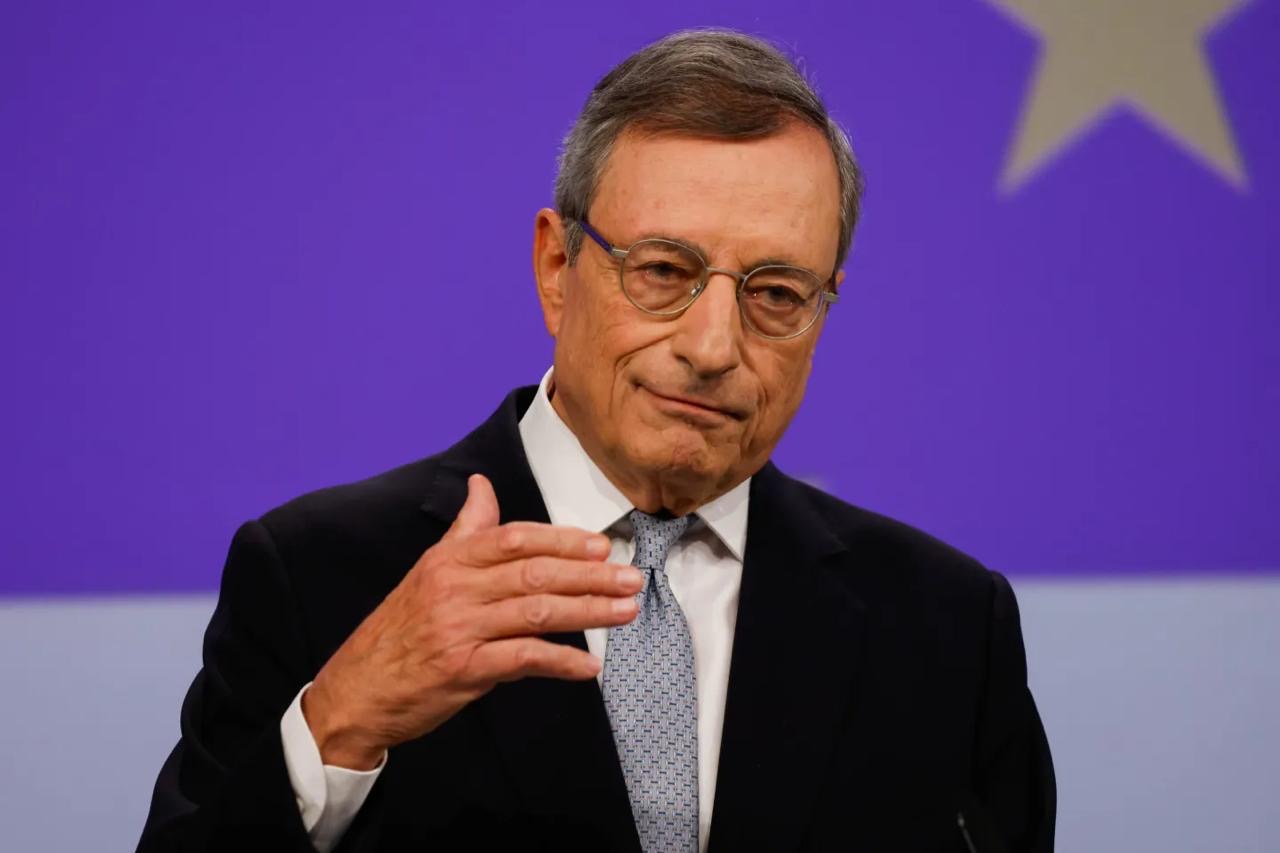
Mario Draghi report and the future of EU competitiveness: A Call for European Integration
by Miguel Teles
This September, former Italian prime minister and former president of the European Central Bank, Mario Draghi presented a 400 pages document entitled “The Future of European Competitiveness”. Draghi was asked by the European Commission to produce a report on its personal views on boosting European competitiveness. Although not completely new, his ideas are courageous and ambitious. In his report Mario Draghi highlights that the solutions for the current European problems lie in the path of European integration. Now, it will be in the hands of the member states whether to follow or not his advice and provide the proper resources to implement it.
In the report, Draghi identifies 3 key challenges the EU must address to ensure the future of European competition, closing the innovation gap with the US, harmonizing decarbonization with competitiveness and enhancing economic security by reducing dependencies. Firstly Draghi stresses that the innovative capacity of Europe is strong, but at least one-third of its corporate “unicorns” have relocated abroad, primarily to the US, due to regulatory, financial and training barriers. To tackle the gap with the US, the report proposes incentivizing high net-worth individuals in investing in start-ups and small business, involving the European investment bank, and reforming pension plan regulations to channel European savings towards investment. Secondly, highlights the need to align decarbonization with competitiveness. The current energy crisis has led to a significant increase in energy costs in Europe. Draghi argues that decarbonization is an economic necessity which can boost EU competitiveness, if well managed, but it risks undermining it if it is poorly executed. The suggestion is to develop European-level industrial policies in clean technology and electric vehicles to maintain a level playing field. Thirdly, there is the challenge on how to integrate Europe’s defense industry. The report gives a raw and eye opener assessment of the poor state of Europe’s defense industrial sector. Draghi highlights the sector’s intense fragmentation when what it needs is scale and demand aggregation. He also highlights the amount of imports from outside of the EU, which is as high as 80%, while stressing the need to “buy European”.
The times are changing and the EU needs to prepare, no more Russian cheap energy, no more unlimited Chinese markets and no more US guarantees of security. This combined with declining competitiveness and getting behind on industrialization, opened a need for the EU to rethink its growth model. It needs to rely more on itself and less on its allies. The report points out the need for greater EU strategic autonomy and economic security to reduce the possibility of economic coercion by third countries. While acknowledging the high costs of autonomy, Draghi suggests mitigating these through cooperation among member states and trade agreements with non-EU countries.
This raises the question – how much would this all cost? Draghi quantifies the additional annual investment needs at over 800 billion euros, or about 5 percent of EU GDP. Financing these investments will require the development of European capital markets and completing the Banking Union, along with greater public resources for joint projects funded by European debt. Although it will comprime a massive effort from EU countries, as Mario Draghi wrote “The EU has reached a point where, without action, it will have to compromise either its welfare, the environment or its freedom”, now more than ever it’s the survival of the European project that is at stake. Most of Mr Draghi’s plans require power to be transferred away from national governments. Countries like Germany and Netherlands seem septic to
the idea of more joint spending but the reality, as Draghi argues, is “Never in the past has the scale of our countries appeared so small inadequate relative to the size of the challenges”.
The urgent need for more integration has arrived stronger than ever, failing to achieve it might be fatal for the EU. We only can hope that Draghi’s intellectual and political authority will ensure that Brussels takes this report seriously. With euroscepticism on the rise in most countries and limited political will for treaty changes or deeper integration this report arrives at a delicate moment. The main risk is that these valuable proposals could end up in neverending debates over joint financing and eurobonds, which face strong opposition from countries like Germany.