Ensuring Voting for Maltese Citizens Overseas
by Hailey Grima
In a true democracy, it is only natural that every citizen has the right to vote, but this is not entirely true for the Maltese state. Maltese nationals living abroad, despite several years of appeals for changes to electoral law, still cannot vote from abroad. Although several alternative methods of voting exist globally—methods which would make voting more accessible to Maltese expats—Malta, along with three other European Union member states, namely Slovakia, Ireland, and Czechia, still does not offer alternative voting methods, requiring its nationals living abroad to be physically present to vote.
Instead of introducing reforms in electoral law, the Maltese state has continuously relied on an archaic and unsustainable method, wasting public funds to fly in nationals from abroad. The government has subsidised flights with the national airline, spending a total of €815,000 and €1.9 million in 2019 and 2022 respectively, out of taxpayers’ pockets. While this has moderately served as a sufficient short-term solution, the government has a duty to innovate and reform and develop a long-term solution.
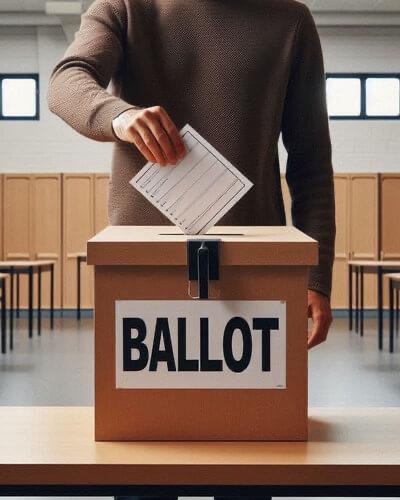
Considering the many obstacles’ people face when it comes to spending time and money to travel and vote—especially with the memory of the restrictions imposed by the pandemic—one would expect that we have learned valuable lessons. It seems only logical, therefore, that we should prioritise removing barriers that inhibit the fundamental right to vote. Regardless, while both the Labour Party and the Nationalist Party in Malta have discussed the possibility of allowing voting from abroad, this has thus far remained an unfulfilled promise.
With a little more than two years left until the next general election, it is time that other voting methods, including voting from an embassy, by proxy, or by post—methods common in several democratic countries—are introduced to improve our democracy. Every voice and vote matters, and it is our right as citizens, no matter our location, to have at our disposal the most reasonable and accessible way of voting.