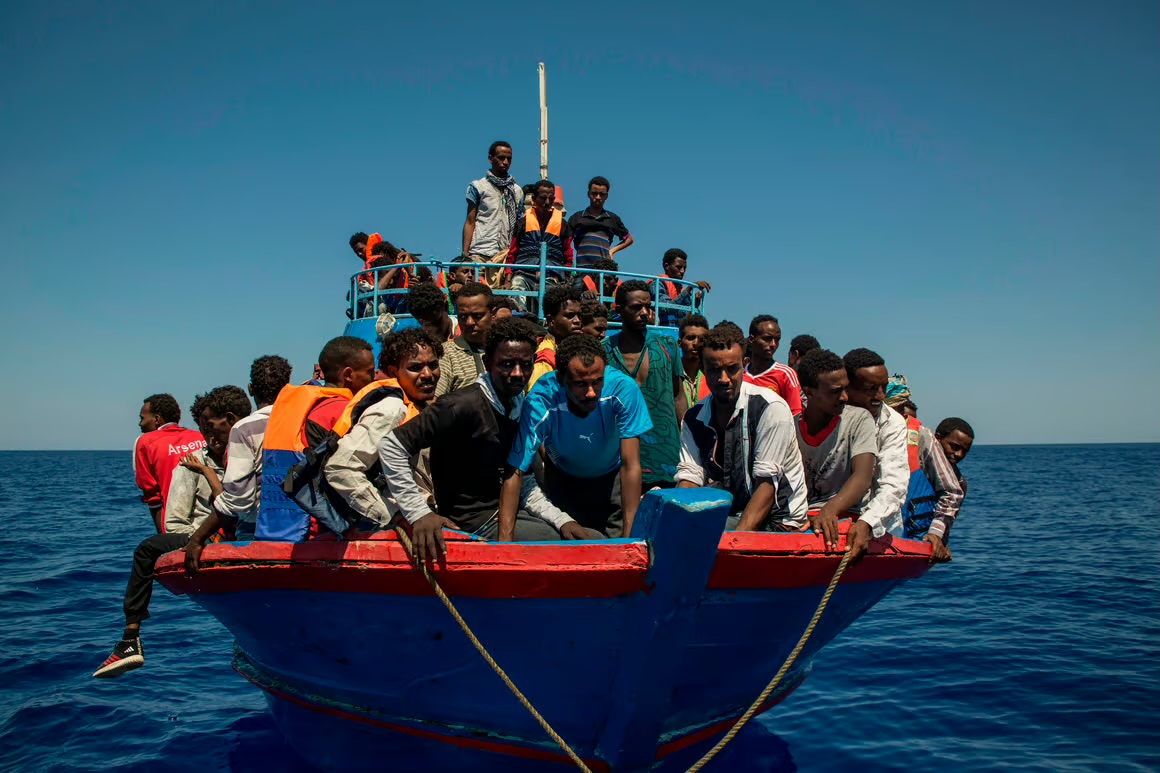
The New EU Pact on Migration and Asylum and its Impact on the EU
By Martin Bajada
The European Union’s (EU) approach to migration governance has been under sustained strain since the 2015 migration crisis exposed the systemic weakness of the Dublin III Regulation. Designed to allocate responsibility for asylum claims, Dublin III ultimately produced a disproportionate burden on border states such as Italy, Greece and Malta, while failing to secure genuine solidarity among Member states. The resulting fragmentation fuelled deep political divisions across the Union, with migration policy becoming a lightning rod for broader debates over sovereignty, security and European identity. Against this backdrop, the New Pact on Migration and Asylum was proposed as a comprehensive recalibration of the EU’s migration framework. Emphasising operational efficiency, flexible solidarity mechanisms and external partnerships with third countries, the Pact aims to restore order and cohesion. However, while offering pragmatic responses to political pressures, the Pact raises significant legal concerns. In its pursuit of expedited procedures and crisis management flexibility, it risks undermining fundamental rights protections enshrined in EU law, the European Convention on Human Rights (ECHR) and international refugee and human rights instruments. This article critically examines the impact of the New Pact on Member States and Union’s constitutional architecture, interrogating whether operational gains come at the cost of normative erosion.
The European Union’s approach to migration and asylum policies are grounded in a robust legal framework that reflects both regional constitutional commitments and binding obligations under international law. Articles 77 to 80 of the Treaty of the Functioning of the European Union (TFEU) define the area of freedom, security and justice, establishing the Union’s competence to develop a common policy on asylum, immigration and external border control. Complementing this, the Charter of Fundamental Rights of the European Union guarantees the right to asylum under Article 18 stating, ‘the right to asylum shall be guaranteed with due respect for the rules of the Geneva Convention of 28 July 1951 and the Protocol of 31 January 1967 […] and in accordance with the Treaty establishing the European Community’ and prohibits collective expulsions and refoulement under Article 19, embedding fundamental protections within the EU’s constitutional order. These safeguards are reinforced by the ECHR, notably Articles 3 and 13, which prohibit torture and inhuman or degrading treatment, guaranteeing access to effective legal remedies. At the international level, the 1951 Convention Relating to the Status of Refugees, Particularly Article 33, codifies the principle of non-refoulement, ‘No Contracting State shall expel or return (‘refouler’) a refugee in any manner whatsoever to the frontiers of territories where his life or freedom would be threatened[…],’ codifying the principle of non-refoulement, prohibiting the return of individuals to territories where their life or freedom would be threatened. Similarly, the Convention Against Torture (CAT) extends this prohibition under Article 3(2), ‘for the purpose of determining whether there are such grounds, the competent authorities shall take into account all relevant considerations including, where applicable, the existence in the State concerned of a consistent pattern of gross, flagrant or mass violations of human rights.’ to situations where there is a real risk of torture. Moreover, the United Nations Convention on the Law of the Sea, under Article 98, imposes a duty to rescue persons in distress at sea, reinforcing the humanitarian obligations of coastal states.
The New Pact on Migration and Asylum introduces a series of legal instruments that collectively reshape the operational and legal landscape of EU migration governance. Central to the Pact is the Screening Regulation, which mandates biometric registration and security checks for all individuals before they are formally admitted to EU territory. As the commission itself asserts, the purpose is to carry out Search and Rescue with ‘[…] coordination and respect for the fundamental rights of rescued people, including the principle of non-refoulement,’ yet this pre-admission screening blurs the line between entry refusal and asylum rights, raising concerns over access to effective protection. The Asylum Procedures Regulation further accelerates processing through border procedures, with an emphasis on speed and efficiency. However, the compression of procedural guarantees into fast-track formats risks undermining the rights to a fair hearing and effective remedy, as protected by the Charter and the ECHR. The crisis and Force Majeure Regulation permits derogations from standard procedures in times of mass influx, allowing member states to suspend or limit rights that should otherwise be non-derogable. As Human Rights Watch (HRW) warns, such emergency frameworks that will ‘[…] severely curtail rights by making it harder to apply for asylum, increasing detention at borders, and allowing EU countries to suspend access to and deny asylum in vaguely defined situations.’ Meanwhile, the Asylum and Migration Management Regulation introduces a modified solidarity model based on return sponsorships, whereby member states can fulfil solidarity obligations by financing or facilitating the removal of migrants rather than offering relocation. Finally, the Pact relies heavily on externalisation strategies, forging partnerships with third countries such as Panama Tunisia and Libya. Reports have documented that these agreements contribute to ‘Criminals and bandits abuse migrants and asylum seekers as they cross the many routes across the jungle, especially on the Panamanian side,’ thereby displacing but not eliminating the Union’s legal responsibility for human rights violations.
The New Pact’s implementation is set to produce asymmetrical effects across the EU, reflecting the divergent interests and structural vulnerabilities of different member States. For Mediterranean frontline states such as Italy, Greece, Malta and Spain, the Pact offers some relief through redefined burden sharing mechanisms. Relocation commitments and financial solidarity are nominally strengthened, addressing long-standing grievances under the Dublin III system. However, the Pact’s emphasis on mandatory fast-track procedures at the borders carries serious risks of systemic human rights violations. As the ECHR warned in M.S.S. v Belgium and Greece, accelerated asylum processing without sufficient procedural guarantees can lead to conditions that amount to inhuman and degrading treatment, violating article 3 of the ECHR which holds that, ‘no one shall be subjected to torture or to inhuman or degrading treatment or punishment’ the Cour emphasised that ‘the mere fact that the asylum procedure in place in a European Union member State is defective does not suffice to demonstrate the existence of such a risk,’ a concern highlight relevant under the new fast-tracked border procedures. For Northern and Eastern Member states, including Poland, Hungary and several other Nordic countries, the Pact offers increased flexibility by allowing participation in solidarity measures through return sponsorship rather than physical relocation of asylum seekers. While politically expedient, this mechanism risks undermining the binding principle of solidarity enshrined under Article 80 of the TFEU, which calls for a ‘fair sharing of responsibility’ between member States. As critics argue, ‘EU leaders need to abandon these harmful strategies, end Europe’s collusion in abuses against people on the move outside its borders, and instead create safe and legal routes for people to seek asylum and safety,’ if the Union’s foundational values are to be upheld. Thus, the pact risks entrenching a two-speed asylum system, exacerbating disparities rather than correcting them.
That being said, the Pact poses profound risks not only for individual rights but also for the European Union’s constitutional integrity and its standing under international law. First, the Pact’s reliance on derogations during times of crisis threatens to undermine non-derogable rights protected by the ECHR and the Charter of Fundamental Rights. The right not to be subjected to torture or inhuman or degrading treatment, the right to asylum and the principle of non-refoulement are not subject to suspension, even in emergency contexts. By enabling Member States to bypass standard procedures during crisis, as proposed in the Regulation addressing situations of crisis and force majeure under the Pact, the EU risks violating obligations that are absolute under international law ‘no derogation is permitted.’ A union founded on the rule of law cannot afford to erode these fundamental commitments without forfeiting its own constitutional identity and global credibility. Equally alarming is the accountability deficit created by the Pacts externalisation strategies. The Commission acknowledges that the internal and external dimensions of migration are inextricably linked and that partnerships with third countries form a pillar of migration management. However, evidence from HRW extensively documents systemic abuses against migrants in partner countries such as Tunisia and Libya, including arbitrary detention, torture and forced returns. By outsourcing migration control to third states with poor human rights records, the EU risks breaching its positive obligations under the ECHR namely, the duty to ensure that individuals are not exposed to prohibited ill treatment, even indirectly. As the European Court of Human Rights (ECtHR) has emphasised, ‘contracting State to be able to be held responsible for acts or omissions imputable to it which give rise to an allegation of the infringement of rights and freedoms set forth in the Convention’ when it exercises effective control or indirectly contributes to rights violations. Furthermore, through externalisation, the EU not only shifts operational responsibility but also exposes itself to serious legal liability for complicity in human rights abuses abroad. The Pact, in its current form, risks transforming Union that once aspired to be a human rights leader into complicit in circumventing the very norms its helped to create.
Despite its ambitions to provide ‘Search and rescue operations in emergency situations require coordination and rapid disembarkation in a place of safety, and respect for the fundamental rights of rescued people,’ the New Pact on Migration and Asylum appears less a fresh beginning than an entrenchment of the structural flaws it claims to remedy. While politically expedient, the Pact reconfigures rather than resolves the EU’s migration challenges. First, solidarity remans largely superficial. Although the Commission promises that ‘This framework should lay down specific rules for solidarity between Member States, and address the need for reinforced cooperation among in particular the flag and costal Member States,’ the flexible mechanisms, particularly the return sponsorship, allow states to sidestep meaningful relocation, relocating the fragmentation seen under Dublin III. Genuine solidarity, as demanded by Article 80 TFEU, is not satisfied by financial transfers or voluntary returns. Second, the Pact risks the violation of fundamental rights. Accelerated border procedures closely mirror the systemic deficiencies condemned in M.S.S. v Belgium and Greece, where the EctHR identified failures that exposed applicants to degrading conditions. Without robust procedural safeguards, expediting assessments threaten to produce rights violating outcomes on a systemic scale. Third, the Pact fosters outsourcing of human suffering. Cooperation with external partners like Libya and Tunisia, despite their poor human rights records, displaces but does not extinguish the EU’s legal responsibilities under international law.
It is imperative to understand that the Pact emerges from a political climate marked by the failures of the Dublin III Regulation and the pressures of the 2015 migration crisis. While presented as a comprehensive recalibration, the Pact largely reconfigures existing flaws rather than resolving them. Although the Commission holds that no state have to shoulder a disproportionate burden posed by incoming waves of migrants, solidarity remains largely superficial, will return sponsorship allowing states to sidestep genuine relocation. Accelerated border procedures, introduced to enhance efficiency, risk replicating the systemic failures, condemned by the ECtHR in M.S.S. v Belgium and Greece. Derogations during crises further threaten non-derogable rights under the Charter and the ECHR, particularly the right to asylum and prohibition of torture. External partnerships with countries like Libya and Tunisia, described as ‘exposing them to abuses,’ shift responsibility without eliminating EU legal obligations. The Pact, by displacing human suffering and compressing procedural protections, places the Union at a decisive legal and ethical crossroads. Short-term political gains are secured at the risk of long-term erosion of the EU’S constitutional integrity and its credibility as a global defender of human rights.
Faced with ongoing tensions between operational necessity and legal obligation, the EU’s New Pact on Migration and Asylum risks perpetuating the very deficiencies it seeks to address. While it aims to respond to the structural failings revealed by the Dublin III Regulation, the Pact largely repackages previous weakness under the guise of reform. The emphasis on flexible solidarity, accelerated border procedures and externalised migration control threatens to erode core protections enshrined in EU law, the ECHR, and international refugee norms. By permitting derogations and delegating responsibilities to third countries with poor human rights records, the Union Compromises both the rights of individuals and its own constitutional integrity. Though the Pact may offer a short-term political solution, it fundamentally challenges the EU’s self-image as a leader in human rights protection. Without strong independent oversight and vigilant judicial review, there is a serious risk that pragmatic compromises will lead to long term legal and moral regression, undermining the credibility and cohesion of the European project.