Spinelli’s Vision: A Progressive Europe that Challenges the Global Balance of Power
by Dinis de Oliveira Fernandes
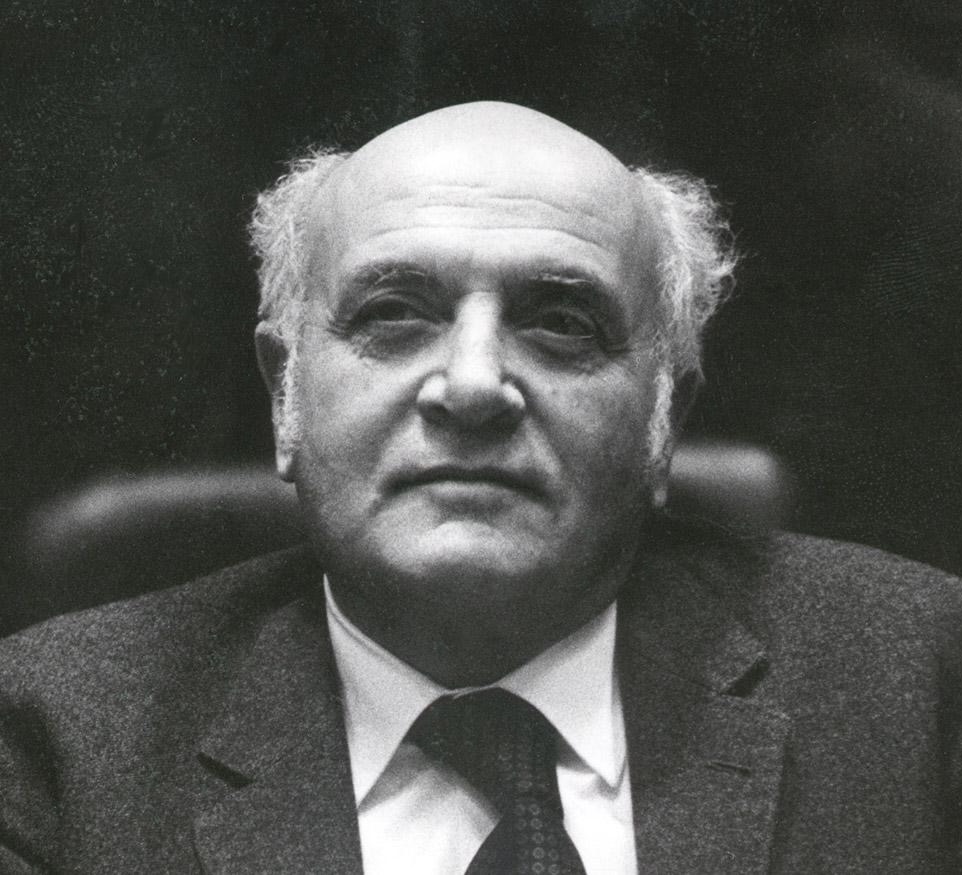
Altiero Spinelli, a name that resonates through the corridors of European history, envisioned a Europe united not merely by economic interests but by shared progressive values. Today, his vision stands at a crossroads, as the European Union finds itself in a world dominated by a single superpower, the United States, and a potential superpower with an almost unparalleled economic power, China. If Europe is to reclaim its agency on the global stage, it must boldly challenge this balance of power, breaking away from decades of subservience to US hegemony and offering a more socially just, progressive alternative to China’s authoritarian model.
Since the fall of the Soviet Union in 1991, the United States has exercised unrivalled dominance over global affairs, often through the imposition of its military, economic, and cultural influence. The “Pax Americana” has not been without its casualties. From military interventions in Iraq and Afghanistan to economic policies that have exacerbated inequalities across the globe, US imperialism has perpetuated instability and undermined the sovereignty of nations. Europe, often acting as an accomplice, has too often been content to act as a junior partner in the American-dominated world order. But the time for complacency is over. Spinelli’s vision offers a blueprint for how Europe can liberate itself from the shadows of US imperialism and carve out its own path. A socially united, federal Europe, one that places human dignity for everyone, social justice, and environmental sustainability at the heart of its foreign policy, can offer the world a new model of global leadership—one that does not rely on military force or exploitative economic practices.
To do this, Europe must first shake off its dependence on the United States. NATO, long seen as the cornerstone of European security, now binds Europe to the whims of American foreign policy. From Ukraine to Palestine and the Middle East, European nations are dragged into conflicts that serve US interests, not necessarily European ones. Instead, a united Europe should pursue strategic autonomy, building its own defense capabilities and prioritizing diplomacy over military alliances.
Equally crucial is Europe’s economic independence. The EU must resist the US-led neoliberal order that prioritizes corporate profits over the welfare of ordinary citizens. With the European Green Deal, the EU has an opportunity to not only lead the world in tackling climate change but to redefine global trade in ways that prioritize human dignity and sustainability over the unfettered capitalism championed by Washington.
Then there is China. Europe should not mimic the US’s confrontational stance against China, nor should it acquiesce to Beijing’s authoritarianism. Instead, Europe can position itself as a third power—a positive rival to China by proving that economic success can be achieved without sacrificing democratic principles. By strengthening its technological and industrial base and securing fair trade agreements that uphold labour and environmental standards, Europe can compete with China on a level playing field without compromising its values. But Spinelli’s Europe is more than just a geopolitical actor. It is a moral force. Where the United States has often claimed to spread democracy through violence and war, Europe can champion it through diplomacy, economic strategy, cultural exchange, and development aid by deepening the competences of DGs like INTPA.
Where China seeks to influence the developing world through economic coercion, Europe can offer partnerships based on equality and respecting the decisions made in those countries, not by imposing its rule like it did back during colonial rule.
It is time for Europe to act as a beacon of progressive values in a world where authoritarianism is on the rise and US imperialism has reached its limits. A united, progressive Europe could reshape the global order—not by competing in a zero-sum game of superpower politics, but by offering an alternative vision: a cooperative, multipolar world where power is shared, not hoarded. Spinelli’s Europe would stand firm against the inequalities and injustices that have long been perpetuated by both the US and China.
This is the Europe that Spinelli envisioned—a Europe that stands tall, confident in its ability to lead on the global stage, not through force or domination, but through the strength of its progressive ideals. And this is the Europe that the world so desperately needs today.
The future of global power need not be a bipolar struggle between Washington and Beijing. A socially united, progressive Europe has the potential to disrupt this narrative and present a new path forward. It is time for Europe to take its place at the table—not as a follower, but as a leader. Spinelli’s vision lives on, and it is up to us to bring it to life.